Friends of Nachusa Grasslands
  • Home
  • About Friends
    • Mission, Leadership, Objectives, and Financials
    • Executive Director – Mike Saxton
    • Friends Annual Meeting 2025
    • Endowments
    • Heritage Heroes Initiative
    • Friends Annual Reports
    • Newsletters >
      • PrairiE–Update (email)
      • A Prairie Calling (print and digital)
    • Commenting Policy
  • Plan Your Visit
    • Hours & Parking
    • Directions and Map
    • Visitor Center
    • Pet Policy
    • Public Bison Tours
    • Bison Viewing
    • Hiking >
      • Hiking Guidelines
      • Hiking Destinations
      • Guided Hikes
      • Stone Barn Savanna Tour
      • Visitor Center Trail
      • Scavenger Hunt
    • Trailhead — Thelma Carpenter Prairie
    • Fall Festival >
      • Yearly Festival
    • What's In Bloom?
    • Exploring Nachusa Grasslands on Your Own
    • Things to Do
    • Places to Eat and Stay
    • Local Sites to Visit and Explore
  • Donate
  • Calendar
  • Volunteer
    • Volunteer Opportunities
    • Thursday and Saturday Workdays >
      • Workday Signup
      • Workdays – November to February
      • Volunteer Workday Safety Protocols
      • Leader Workday Safety Protocols
      • Steward Workday Tips
    • Workday Email List
    • Volunteer Recognition
    • Docents
  • Stewardship
    • Nachusa Stewardship
    • Restorations
    • Planting Histories >
      • Stewardship Unit Planting Histories
      • Planting Histories in Chronological Order
    • Weed Reports
    • Native plant resources
    • Volunteer Stewards
    • Groups and Committees
    • Available Units
    • Controlled Burns
    • Prescribed Fire Recruitment
    • Restoration Publications
    • Stewardship Resources >
      • Seed Collection Guides
      • Invasive Plant Management
      • Invasive Identification
      • Monitoring
      • Resource Links
  • Science
    • Science at Nachusa Grasslands
    • Science Symposium 2025
    • 2025 Science Symposium Abstracts
    • Science Grants >
      • Science Grants 2025
      • Science Grants 2021 to 2024 >
        • Science Grants 2024
        • Science Grants 2023
        • Science Grants 2022
        • Science Grants 2021
      • Science Grants 2016 to 2020 >
        • Science Grants 2020
        • Science Grants 2019
        • Science Grants 2018
        • Science Grants 2017
        • Science Grants 2016
      • Science Grants 2011 to 2015 >
        • Science Grants 2015
        • Science Grants 2014
        • Science Grants 2013/2012/2011
    • Potential Research Topics
    • Scientific Publications
    • Anderson Science Award
    • Science Videos
    • Become a Community Scientist >
      • About Community Scientists
      • Butterfly Monitoring
      • Calling Frog Monitoring
      • Dragonflies & Damselflies
      • RiverWatch
  • About Nachusa
    • General Info
    • Nachusa Staff
    • Prairie Smoke Annual Reports
    • Plant Inventory >
      • Common Names
      • Genus Species
    • Animal Inventory >
      • Amphibians
      • Birds
      • Bison Bison >
        • Bison
        • Bison Babies Broadcast Videos
      • Fish
      • Insects
      • Mammals
      • Other Arthropods
      • Reptiles
    • History
    • Jobs
    • Hunting
    • Geology >
      • Geology Part 1
      • Geology Part 2
      • Geology Part 3
    • Websites of Interest
  • Teacher Resources
    • K-2nd grades
    • 3rd-5th grades
    • 6th-8th grades
    • High School
  • BLOG AND MEDIA
    • Nachusa Blog
    • In The News
    • Photo Gallery >
      • Spring Photos
      • Summer Photos
      • Autumn Photos
      • Winter Photos
    • Videos
  • Contact Us / FAQs

Dogwood Family (Cornaceae)

  • gray dogwood​

Figwort Family (Scrophulariaceae)

  • ​foxglove beard tongue

Picture

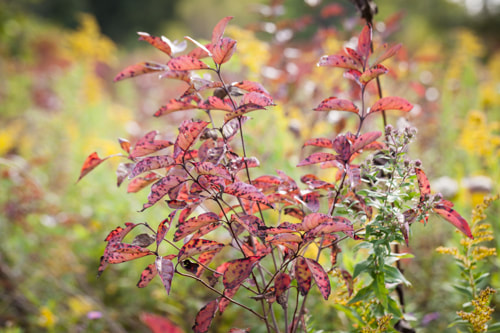
gray dogwood

Cornus racemosa

Mnemonic help
Dogwood shrubs are one of the few groups of opposite branched woody plants. To remember the types
that are opposite, use the saying "MADcapHorse" which stands for Maple, Ash, Dogwood, Caprifoliaceae (the plant family of honeysuckles and viburnums) and Horse Chestnut.
 
Gray dogwood is Nachusa’s most common dogwood. The bushes form clones, especially in areas of frequent fire. These thickets are important for bird nesting and animal cover. It has a domed-shaped cluster of pale flowers that attract many pollinators. The subsequent white berries are relished by many birds and mammals.

Scientific name origin
Cornus is derived from the Latin name from ‘cornu,’ a horn; alluding to the hardness of the wood, and racemosa is from the Latin meaning "clustered", referring to the the arrangement of the flowers on the shrub.

foxglove beard tongue

Penstemon digitalis

Long tongues required for this pollinating job
Long-tongued bees including honeybees, bumblebees and others are the best pollinators for this plant. A sharp observer will see foot prints inside the flower tube left by a foraging bumblebee after it exits.

Scientific name origin

Penstemon is Greek for 5-threads due to the 5 stamens in the flower, and digitalis is Latin for finger (the closed flower somewhat resembles a fingertip).

CONNECT WITH US

PrairiE–Updates Newsletters

SUPPORT US                      

​Donate | Volunteer                  

FIND US ​

Map & Directions

8772 S. Lowden Road  (mailing address)            
2075 Lowden Road (Visitor Center)           
Franklin Grove, IL 61031

Contact Us

Site Map

PRIVACY POLICY
© 2025 FRIENDS OF NACHUSA GRASSLANDS The content on this website is owned by us and our licensors. Do not copy any content (including images) without our consent.
  • Home
  • About Friends
    • Mission, Leadership, Objectives, and Financials
    • Executive Director – Mike Saxton
    • Friends Annual Meeting 2025
    • Endowments
    • Heritage Heroes Initiative
    • Friends Annual Reports
    • Newsletters >
      • PrairiE–Update (email)
      • A Prairie Calling (print and digital)
    • Commenting Policy
  • Plan Your Visit
    • Hours & Parking
    • Directions and Map
    • Visitor Center
    • Pet Policy
    • Public Bison Tours
    • Bison Viewing
    • Hiking >
      • Hiking Guidelines
      • Hiking Destinations
      • Guided Hikes
      • Stone Barn Savanna Tour
      • Visitor Center Trail
      • Scavenger Hunt
    • Trailhead — Thelma Carpenter Prairie
    • Fall Festival >
      • Yearly Festival
    • What's In Bloom?
    • Exploring Nachusa Grasslands on Your Own
    • Things to Do
    • Places to Eat and Stay
    • Local Sites to Visit and Explore
  • Donate
  • Calendar
  • Volunteer
    • Volunteer Opportunities
    • Thursday and Saturday Workdays >
      • Workday Signup
      • Workdays – November to February
      • Volunteer Workday Safety Protocols
      • Leader Workday Safety Protocols
      • Steward Workday Tips
    • Workday Email List
    • Volunteer Recognition
    • Docents
  • Stewardship
    • Nachusa Stewardship
    • Restorations
    • Planting Histories >
      • Stewardship Unit Planting Histories
      • Planting Histories in Chronological Order
    • Weed Reports
    • Native plant resources
    • Volunteer Stewards
    • Groups and Committees
    • Available Units
    • Controlled Burns
    • Prescribed Fire Recruitment
    • Restoration Publications
    • Stewardship Resources >
      • Seed Collection Guides
      • Invasive Plant Management
      • Invasive Identification
      • Monitoring
      • Resource Links
  • Science
    • Science at Nachusa Grasslands
    • Science Symposium 2025
    • 2025 Science Symposium Abstracts
    • Science Grants >
      • Science Grants 2025
      • Science Grants 2021 to 2024 >
        • Science Grants 2024
        • Science Grants 2023
        • Science Grants 2022
        • Science Grants 2021
      • Science Grants 2016 to 2020 >
        • Science Grants 2020
        • Science Grants 2019
        • Science Grants 2018
        • Science Grants 2017
        • Science Grants 2016
      • Science Grants 2011 to 2015 >
        • Science Grants 2015
        • Science Grants 2014
        • Science Grants 2013/2012/2011
    • Potential Research Topics
    • Scientific Publications
    • Anderson Science Award
    • Science Videos
    • Become a Community Scientist >
      • About Community Scientists
      • Butterfly Monitoring
      • Calling Frog Monitoring
      • Dragonflies & Damselflies
      • RiverWatch
  • About Nachusa
    • General Info
    • Nachusa Staff
    • Prairie Smoke Annual Reports
    • Plant Inventory >
      • Common Names
      • Genus Species
    • Animal Inventory >
      • Amphibians
      • Birds
      • Bison Bison >
        • Bison
        • Bison Babies Broadcast Videos
      • Fish
      • Insects
      • Mammals
      • Other Arthropods
      • Reptiles
    • History
    • Jobs
    • Hunting
    • Geology >
      • Geology Part 1
      • Geology Part 2
      • Geology Part 3
    • Websites of Interest
  • Teacher Resources
    • K-2nd grades
    • 3rd-5th grades
    • 6th-8th grades
    • High School
  • BLOG AND MEDIA
    • Nachusa Blog
    • In The News
    • Photo Gallery >
      • Spring Photos
      • Summer Photos
      • Autumn Photos
      • Winter Photos
    • Videos
  • Contact Us / FAQs